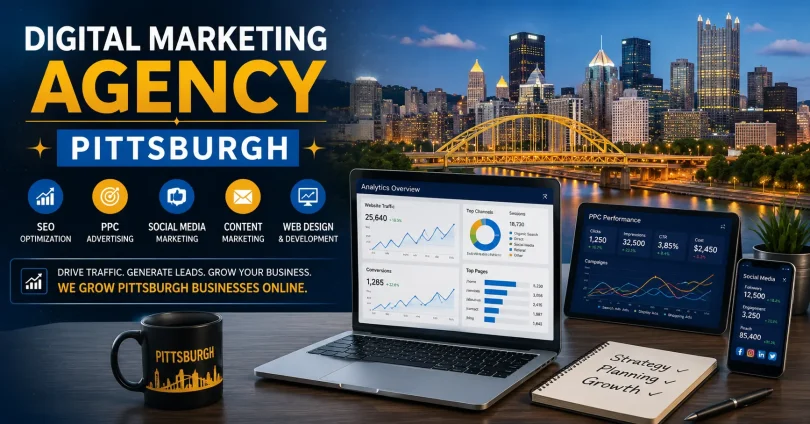

A digital marketing agency Pittsburgh helps local businesses grow through services like SEO, paid ads, social media, and web design. The right agency understands Pittsburgh’s specific industry landscape, from healthcare and higher ed to manufacturing and tech, and builds campaigns around your market rather than recycling national templates. Choosing the right one requires vetting their track record, pricing transparency, and whether they’ve actually worked in your sector.
What Makes Pittsburgh’s Digital Marketing Market Different
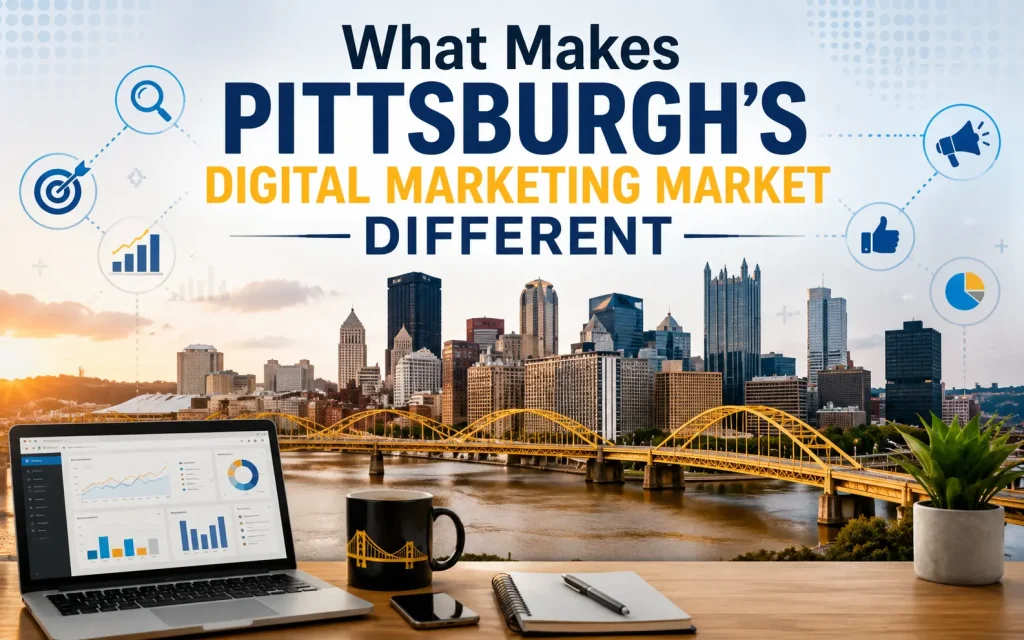
Pittsburgh is not a generic mid-size American city, and its digital marketing needs are not generic either.
The city runs on a handful of dominant industries: healthcare (UPMC and Allegheny Health Network together employ tens of thousands), higher education (Carnegie Mellon and the University of Pittsburgh anchor a research economy worth billions), a growing tech and robotics sector concentrated in the East End and Strip District, and a manufacturing base that never fully disappeared. It just got smarter.
Any agency claiming Pittsburgh expertise should know this landscape cold. A hospital system’s digital marketing priorities, compliance requirements, and audience psychology are radically different from a Lawrenceville SaaS startup’s or a South Hills home services company’s.
If an agency pitches you the same SEO and social media package they give every client, they don’t actually know your market. That’s the first filter.
The Accountability Gap No Competitor Article Talks About
Here’s something most agency roundup articles skip entirely: the difference between what an agency promises in a sales call and what they actually deliver in month four.
This gap is real and it’s common. Agencies are often excellent at winning business and mediocre at retaining it. The reason is almost always scope drift, vague reporting, and a lack of agreed-upon milestones.
Before you sign with any Pittsburgh digital marketing agency, get clear answers to these five questions:
- Who exactly will be working on my account? (Not the senior team member who pitched you, but the actual day-to-day contact.)
- What does the first 90 days look like in concrete deliverables?
- How do you report results, and how often?
- What happens if we don’t hit agreed benchmarks?
- Do you have experience with businesses in my specific industry?
If any of these questions produce vague, hedged answers, treat it as a signal.
Pittsburgh’s Industry Verticals and Why They Change Everything
Healthcare and HIPAA-Adjacent Marketing
Pittsburgh’s healthcare sector is enormous. UPMC alone generates over $26 billion annually. Healthcare providers, medical device companies, and health tech startups need digital marketing that respects HIPAA constraints, navigates Google’s sensitive category ad policies, and builds trust with a patient audience that is justifiably skeptical.
Not every agency knows how to do this. Ask directly: have they run campaigns for healthcare clients? Do they understand the restrictions on patient data in remarketing?
Higher Education and the Research Economy
CMU and Pitt between them attract billions in research funding and tens of thousands of students annually. The ecosystem that surrounds them, edtech companies, research spinoffs, student-facing services, demands digital marketing that speaks to an unusually educated, analytically skeptical audience.
Content marketing and SEO matter more in this vertical than interruptive paid ads. If an agency’s entire strategy is Google Ads, they may not be the right fit.
Manufacturing and B2B Industrial
Pittsburgh manufacturing isn’t dead. It evolved. Companies making specialty steel, robotics components, and advanced materials are actively competing for contracts nationally and globally. Their digital marketing challenge is B2B lead generation with long sales cycles, LinkedIn over Instagram, and white papers over social posts.
Most agencies default to B2C playbooks. A good Pittsburgh agency working in industrial B2B understands the 6-to-18-month sales funnel and builds content and lead gen systems accordingly.
Hospitality, Restaurants, and Local Retail
Pittsburgh’s neighborhood restaurant scene, from Strip District food markets to Shadyside boutiques, lives and dies by local search visibility, Google Business Profile management, and hyperlocal social media. This is a completely different discipline from healthcare marketing or B2B lead gen.
An agency that’s excellent at restaurant marketing may be the wrong choice for your software company.
Local Agency vs. National Agency With a Pittsburgh Office – The Real Difference
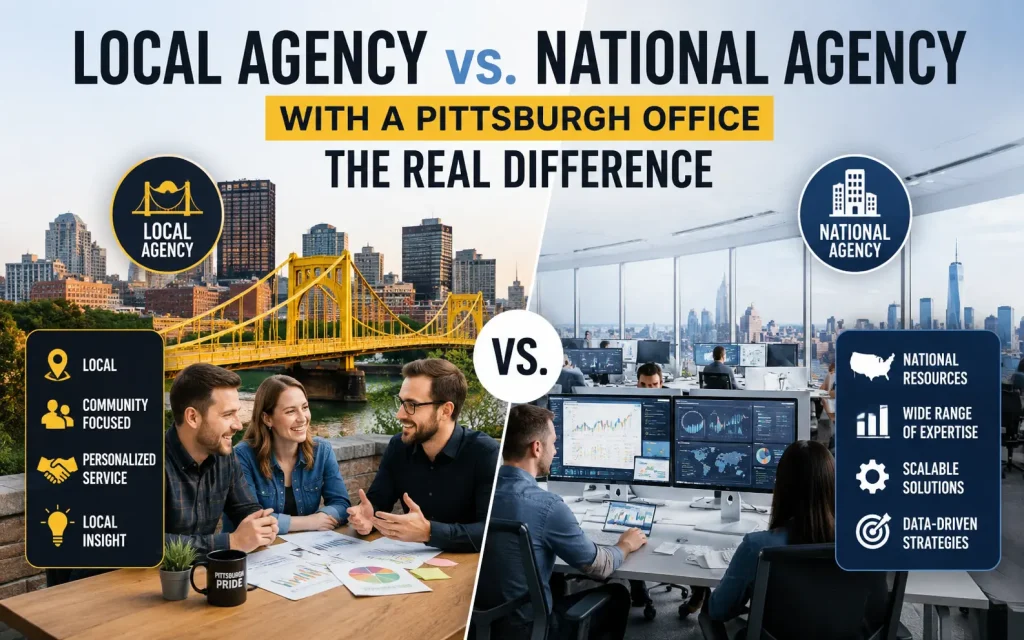
Several large national digital marketing agencies have satellite offices or regional representatives claiming Pittsburgh expertise. There’s nothing wrong with a national agency, but you need to know what you’re actually buying.
A Pittsburgh-native agency typically offers:
- Relationships with local media, publications, and influencers
- Knowledge of Pittsburgh’s neighborhood-level market dynamics
- Easier in-person collaboration and faster communication
- Genuine familiarity with local consumer behavior and seasonal patterns
A national agency with a local rep typically offers:
- Access to larger production teams and proprietary tools
- Experience with bigger budgets and enterprise-scale campaigns
- Potential to scale nationally if your business grows
Neither is automatically better. The question is which fits your current stage, budget, and goals. A $3,000/month local services business doesn’t need a national agency’s enterprise infrastructure. A regional healthcare system might.
What Realistic Budgets Look Like in Pittsburgh
This is something almost no agency website tells you, because agencies prefer to have the pricing conversation after they’ve built rapport. But knowing ballpark numbers upfront saves everyone time.
| Business Type | Typical Monthly Budget Range | Primary Channel Focus |
|---|---|---|
| Local service business (plumber, landscaper, etc.) | $1,500 – $4,000 | Local SEO, Google Ads |
| Small professional services firm | $3,000 – $8,000 | SEO, content, LinkedIn |
| Regional B2B company | $6,000 – $20,000 | Paid search, content, ABM |
| Healthcare or education institution | $10,000 – $50,000+ | Multi-channel, compliance-focused |
| E-commerce brand | $5,000 – $25,000 | Paid social, shopping ads, email |
These are agency fees, not ad spend. Your ad budget sits on top of these numbers. An agency charging $2,000/month to manage a Google Ads account with a $500 ad budget is not set up to deliver meaningful results. Ask prospective agencies what minimum ad spend they recommend alongside their management fee.
The CMU and Pitt Talent Pipeline – A Hidden Pittsburgh Advantage
One thing Pittsburgh’s digital marketing scene genuinely has that other mid-size cities don’t: constant access to CMU and Pitt graduates.
CMU’s computer science, human-computer interaction, and data science programs routinely rank among the best in the world. Pitt’s business and communications programs feed into Pittsburgh’s marketing ecosystem. The result is that Pittsburgh agencies, especially the scrappier, newer ones, can hire technical talent that would cost significantly more in New York or San Francisco.
This matters because modern digital marketing is increasingly technical. Data analysis, machine learning-assisted ad bidding, structured data, Core Web Vitals optimization, all of this requires people who can think analytically, not just creatively. Pittsburgh has those people, and they often stay local.
When vetting an agency, ask about their technical team’s background. If they can speak concretely about analytics, tag management, first-party data strategy, or server-side tracking, you’re probably talking to people with real depth.
Red Flags That Are Easy to Miss
A polished website and a roster of client logos don’t mean much. Here are the warning signs that are harder to spot on a first call:
They guarantee specific rankings.
No one can guarantee Google rankings. Anyone who says otherwise either doesn’t understand how search algorithms work or is selling you something they can’t deliver.
Their reporting is all vanity metrics.
Impressions, follower counts, and “reach” are easy numbers to inflate. If an agency can’t connect their work directly to leads, calls, or revenue, their reporting is decorating, not measuring.
They won’t tell you what they’re actually doing.
Some agencies treat their tactics as a black box to reduce accountability. You should always know exactly what work is being done on your account each month.
The contract locks you in for a year with no performance clauses.
Six-month or month-to-month agreements after an initial ramp period are reasonable. A 12-month lock-in with no exit provisions is a red flag.
Case studies are always from a different industry
Relevant experience matters. An agency that only shows wins from restaurant clients pitching a manufacturing company is essentially pitching their ability to learn on your dime.
What the First 90 Days Should Actually Look Like
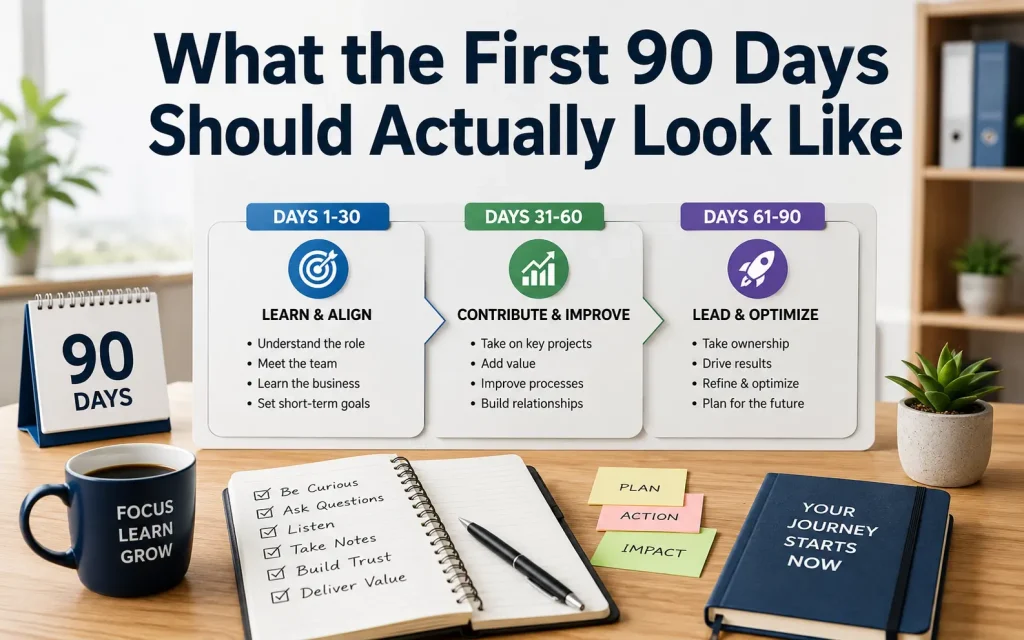
The first three months with any new agency are a setup and learning phase. If an agency promises dramatic results in 30 days, be skeptical.
Here’s a realistic 90-day sequence for most Pittsburgh businesses:
Month 1: Audit of existing assets (website, Google Analytics, Google Business Profile, ad accounts, social channels), competitive analysis, baseline metric documentation, campaign architecture planning.
Month 2: Implementation begins. SEO technical fixes, ad campaigns launch with initial budgets, content calendar established, tracking confirmed working correctly.
Month 3: First real optimization cycle. Campaign data starts to accumulate, initial performance reviewed against baseline, strategy adjustments made based on actual numbers rather than projections.
Real results in most channels, organic SEO especially, take 4-6 months to become statistically meaningful. Paid advertising can show traction sooner, but even PPC typically needs 60-90 days of data before optimization cycles produce reliable lift.
An agency that doesn’t set these expectations upfront is setting you up to feel disappointed at month two, which is exactly when they haven’t actually had enough time to show results.
The AI and Search Shift – What Pittsburgh Businesses Need to Know Now
Search behavior changed significantly in 2024 and 2025 with the rollout of Google’s AI Overviews and the adoption of AI-powered search tools like Perplexity and ChatGPT.
The practical impact for Pittsburgh businesses: being the second or third result in traditional search no longer carries the traffic it once did. Google’s AI Overviews pull answers directly into the search results page, and users often don’t click through at all.
This doesn’t make SEO worthless. It changes what SEO means.
Agencies that understand this shift are building what’s called GEO strategy: structured content written in a way that AI systems cite as a source, clear Q&A formatting, schema markup, and first-party authority signals like reviews, citations, and brand mentions across the web.
If a Pittsburgh agency pitches you a 2020-era SEO strategy focused primarily on keyword density and link counts, they haven’t adapted. Ask them directly: how do you optimize for AI search results and Google’s AI Overviews? Their answer will tell you a lot.
Frequently Asked Questions (FAQs)
How much does a digital marketing agency in Pittsburgh typically charge per month?
Monthly fees range from roughly $1,500 for basic local SEO and Google Business management for a small business, up to $50,000 or more for enterprise healthcare or multi-location brands. Most mid-size Pittsburgh businesses spend between $3,000 and $10,000 per month in agency fees, separate from their ad spend.
How long does it take to see results from digital marketing in Pittsburgh?
Paid advertising can produce leads within the first 30-60 days, though meaningful optimization usually takes 90 days of campaign data. Organic SEO typically shows measurable traction in 4-6 months, with significant results often taking 9-12 months. Any agency promising faster organic results should explain exactly how they’ll achieve it.
Should I hire a local Pittsburgh agency or a national agency?
It depends on your budget, industry, and goals. Local agencies tend to offer more accessible communication, genuine market familiarity, and flexibility. National agencies bring scale and larger teams. For most small-to-mid-size Pittsburgh businesses, a local or regional agency with proven industry experience outperforms a national firm that treats your account as a small line item.
What digital marketing services do Pittsburgh businesses need most?
Local SEO and Google Business Profile management are critical for any business serving local customers. Paid search is effective for high-intent services. Content marketing and LinkedIn matter most for B2B companies. Social media advertising works well for consumer brands. The right mix depends entirely on your industry and customer acquisition model.
What questions should I ask a Pittsburgh digital marketing agency before hiring them?
Ask who specifically will work on your account, what the first 90-day plan looks like, how they report results, whether they’ve worked in your industry, and what happens if campaigns underperform. Also ask whether they manage ad spend in-house or pass it through to platforms directly.
Do Pittsburgh digital marketing agencies understand local search specifically?
The good ones do. Local search in Pittsburgh involves optimizing for Pittsburgh-specific queries, managing citations across directories, generating legitimate reviews, and building geographic signals that tell Google exactly which markets you serve. This is distinct from general SEO and requires specific expertise.
How do I know if a digital marketing agency’s case studies are legitimate?
Look for specificity: real client names (or clear descriptions of the industry), actual numbers with timeframes, and context about what the business looked like before the agency started. Generic claims like “increased traffic by 200%” without details are easy to fabricate. Ask for references you can actually call.
What’s the difference between an SEO agency and a full-service digital marketing agency in Pittsburgh?
An SEO-only agency focuses on organic search rankings through technical optimization, content, and link building. A full-service agency manages multiple channels simultaneously: paid ads, social media, email, content, and web development, often integrated under a single strategy. Full-service agencies cost more but avoid the coordination problems that arise when multiple specialists work in silos.
Final Thoughts
Choosing the right Digital Marketing Agency Pittsburgh businesses can rely on is one of the most important decisions for long term online success. A professional agency helps you increase brand visibility attract qualified leads improve search engine rankings and maximize your marketing budget with data driven strategies.
Whether you are a small local business or a growing company investing in expert digital marketing services can give you a competitive edge in the Pittsburgh market. By partnering with an experienced agency that understands your goals and your audience you can build a stronger online presence generate consistent growth and achieve measurable results that support your business for years to come.
You May Also Like It:
Automotive Digital Marketing Agencies