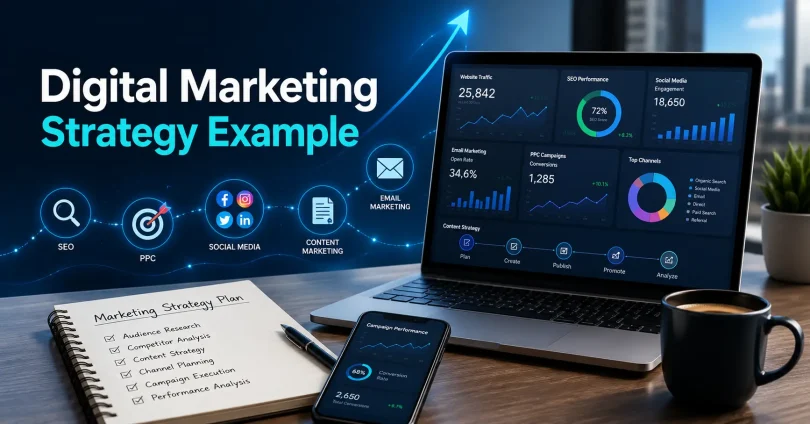

Digital Marketing Strategy Example articles often provide a basic definition, a list of popular marketing channels, and general advice that sounds useful but is difficult to apply in the real world. While these resources explain what digital marketing is, they rarely show you how to build a strategy that delivers measurable results. Businesses need more than theory. They need a practical roadmap that can be adapted to their goals, budget, and target audience.
Digital Marketing Strategy Example guides should include clear objectives, audience research, channel selection, content planning, advertising strategies, and performance tracking. This guide goes beyond the basics by providing real-world examples that you can learn from and customize for your own business. Whether you run a startup, a local business, an eCommerce store, or a service-based company, you’ll discover proven strategies that help increase website traffic, generate qualified leads, and improve conversions.
What Is a Digital Marketing Strategy
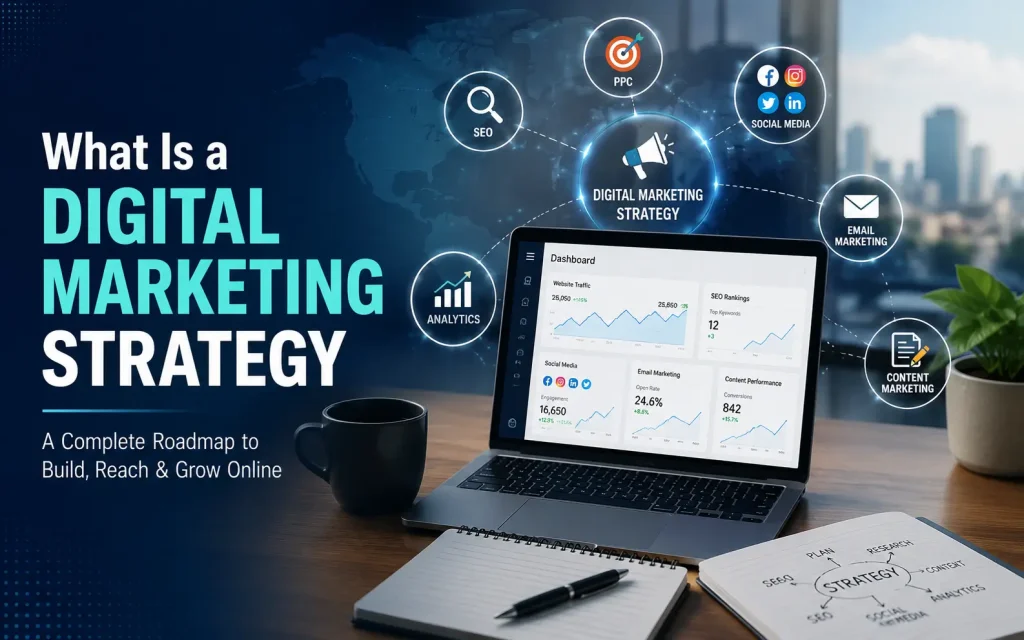
A digital marketing strategy is a written plan that connects your business goal to the specific online channels, budget, and actions you’ll use to reach it. It is not a list of tactics. Posting on Instagram three times a week is a tactic. Deciding that Instagram is where your ideal customer spends time, then building content, ads, and a budget around that decision, is a strategy.
Without a strategy, marketing turns into guesswork: a bit of SEO here, a boosted post there, and no clear way to know if any of it is working.
Why a Real Strategy Beats Random Tactics
Businesses that document their marketing strategy are far more likely to say their marketing is effective than those who don’t. That’s not a coincidence. A documented strategy forces you to answer four questions
before you spend a single dollar:
- Who exactly are you trying to reach
- What do you want them to do
- Which channels will actually get you there
- How will you know if it worked
Skip these questions, and you end up funding whichever channel feels trendy that month.
The Core Framework: Goal, Audience, Channel, Measure
Every strong digital marketing strategy, regardless of industry or budget, follows the same four-part structure.
Set One Primary Goal
Pick a single main goal for each strategy cycle, usually three to twelve months. Trying to boost brand awareness, generate leads, and increase repeat purchases all at once splits your budget and your message.
Use a specific target instead of a vague wish:
Weak: “Get more website traffic.”
Strong: “Increase qualified demo requests from organic search by 25% in six months.”
Define Who You’re Actually Talking To
Build a simple customer profile: their job or role, the problem they’re trying to solve, where they spend time online, and what would make them trust a new brand. You don’t need a 20-page persona document. Three or four honest sentences are enough to guide content and channel choices.
Choose Two or Three Channels, Not Ten
This is where most small businesses go wrong. They spread thin budgets across six channels and do all of them poorly. Pick the two or three channels where your audience already spends time, and commit real budget and effort to those.
Decide How You’ll Measure Success Before You Launch
Set your key metrics before the campaign starts, not after. If you’re measuring success after the fact, you’re just picking whatever number looks good.
7 Digital Marketing Strategy Examples With Real Numbers

Here’s where this article earns its place above the competition: actual budget ranges and steps, not just brand names.
Content Marketing for a B2B Service Business
Goal: Generate inbound leads through search. How it works: Publish in-depth articles answering the exact questions your buyers search for, then link them to a free tool, checklist, or consultation. Typical budget: $1,500 to $5,000 a month for writing, editing, and basic SEO.
Example outcome: A consulting firm publishing two well-researched articles a month can realistically see organic traffic double within nine to twelve months, with leads following three to six months after that, since search results take time to climb.
Email Marketing for an E-Commerce Store
Goal: Increase repeat purchases. How it works: Segment your list into new customers, repeat buyers, and cart abandoners. Send each group a different message: a welcome series, a loyalty offer, and a cart recovery reminder. Typical budget: $20 to $300 a month for an email platform, depending on list size.
Example outcome: Cart-abandonment email sequences alone commonly recover 5% to 10% of lost sales, since the customer already showed intent to buy.
Paid Search for a Local Service Business
Goal: Get calls and bookings from people searching right now. How it works: Bid on high-intent local keywords like “emergency plumber near me,” with ads that go straight to a phone number or booking form, not a homepage. Typical budget: $500 to $3,000 a month, depending on competition in your area.
Example outcome: Local service ads with a clear phone number and tight geographic targeting often convert at a much higher rate than broad national campaigns, because the searcher is ready to buy now.
Social Media Community Building for a Consumer Brand
Goal: Build brand loyalty and word of mouth. How it works: Show the people and process behind the product, not just the product itself. Reply to comments like a person, not a brand account. Typical budget: $0 to $500 a month if run in-house, more with paid boosting.
Example outcome: Brands that consistently reply to comments and messages see meaningfully higher engagement rates than those that only post and go quiet.
SEO-Led Growth for a Startup With No Ad Budget
Goal: Grow visibility without paid spend. How it works: Pick a narrow topic your competitors haven’t fully covered, and become the best answer for it. Depth beats breadth here. Typical budget: Mostly time, or $500 to $2,000 a month if outsourced.
Example outcome: A niche SaaS tool targeting a specific underserved search term can outrank much larger competitors within months, because it has no direct competition on that exact phrase.
Influencer Partnerships for a Product Launch
Goal: Build credibility fast with a new audience. How it works: Work with a handful of smaller, relevant creators instead of one big name. Their audiences trust them more, and the cost per partnership is far lower. Typical budget: $1,000 to $10,000, depending on creator size and number of partners.
Example outcome: Micro-influencer campaigns (creators with 10,000 to 100,000 followers) frequently produce higher engagement rates than celebrity endorsements at a fraction of the cost.
Retargeting Ads for an Abandoned-Cart Recovery Program
Goal: Win back visitors who almost bought. How it works: Show ads only to people who visited your site or added something to their cart, reminding them of exactly what they left behind.
Typical budget: $300 to $1,500 a month. Example outcome: Retargeting ads typically convert several times better than cold display ads, since you’re reaching people who already showed interest
A Worked Example: Building a Strategy From Scratch
Say you run a small skincare brand with a $3,000 monthly marketing budget. Here’s how the framework above turns into an actual plan:
- Goal: Grow monthly online sales by 20% in six months.
- Audience: Women aged 25 to 40 who care about ingredient transparency and follow skincare creators on Instagram and TikTok.
- Channels: Instagram content plus influencer partnerships (60% of budget), email marketing for repeat customers (20% of budget), retargeting ads for cart abandoners (20% of budget).
- Measurement: Track monthly revenue, email repeat-purchase rate, and cost per sale from retargeting ads. Review numbers every four weeks and shift budget toward whatever is working.
That’s a complete strategy in four steps, built on a modest budget, with no guesswork about where the money goes.
Common Mistakes That Quietly Waste Marketing Budgets
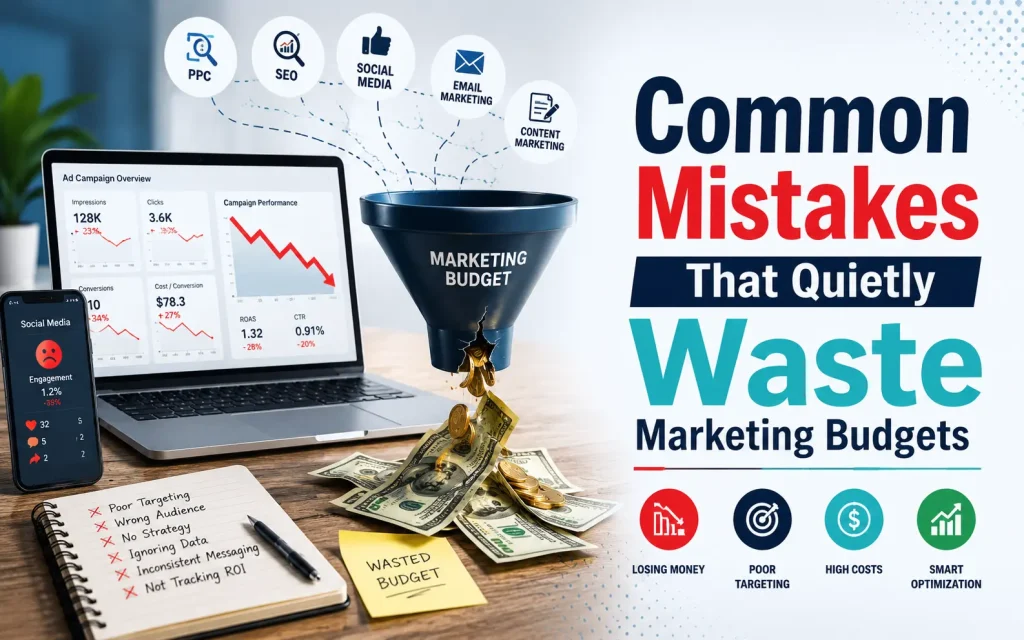
- Chasing every new platform. Being on every channel with no strategy is worse than being on one channel with a clear plan.
- Setting vague goals. “Increase awareness” cannot be measured. “Increase branded search volume by 15%” can.
- Ignoring mobile experience. Most web traffic now comes from phones. A slow or clunky mobile site quietly kills conversions from every channel you invest in.
- Never reviewing the data. A strategy set once a year and never checked is not a strategy, it’s a guess you made in January.
- Copying a competitor’s channel without their audience. Just because a competitor succeeds on LinkedIn doesn’t mean your audience is there too.
How AI Fits Into a 2026 Strategy
AI tools are genuinely useful for a few specific jobs: drafting first versions of content faster, analyzing which ads and subject lines perform best, and personalizing email sends at a scale no human team could manage manually.
They are not useful for replacing the judgment calls in the framework above. No AI tool can tell you which single goal matters most to your business this quarter. That decision, and the strategy built around it, is still yours to make.
Frequently Asked Questions
What is a digital marketing strategy example?
A digital marketing strategy example is a step-by-step plan that uses channels like SEO, PPC, content marketing, email marketing, and social media to achieve specific business goals.
Why is a digital marketing strategy important?
A digital marketing strategy helps businesses reach the right audience, increase brand awareness, generate leads, and improve return on investment (ROI).
What should a digital marketing strategy include?
A successful strategy should include target audience research, business goals, SEO, content marketing, social media, paid advertising, email marketing, and performance tracking.
What is a simple digital marketing strategy example for a small business?
A small business can focus on local SEO, publish weekly blog posts, run Google Ads, stay active on social media, collect customer reviews, and track results using analytics.
How do I create a digital marketing strategy?
Start by defining your goals, identifying your target audience, researching competitors, selecting marketing channels, creating content, launching campaigns, and measuring performance.
Which channels are used in a digital marketing strategy?
Common channels include SEO, Google Ads (PPC), social media marketing, email marketing, content marketing, influencer marketing, and video marketing.
How often should I update my digital marketing strategy?
Review your strategy every month and make major updates every three to six months based on campaign performance, customer behavior, and market trends.
Final Thoughts
A digital marketing strategy doesn’t need to be complicated to work. It needs one clear goal, an honest picture of your audience, a small number of channels you can actually commit to, and a way to measure whether it’s working.
Start with the framework, borrow the example closest to your business, and adjust the numbers to fit your own budget. That’s a stronger starting point than most brands, including your competitors, ever bother to build.
You May Also Like It:
Digital Marketing Services Australia | Appkod