How High to Hang Pictures Decorating your walls can completely transform the look of your home, but even beautiful artwork can look awkward if it’s hung at the wrong height. One of the biggest decorating mistakes people make is hanging pictures too high, too low, or too far away from furniture. The result is a room that feels unbalanced and unfinished.
The good news is that learning how high to hang pictures is actually very simple once you understand a few professional design rules. Whether you’re hanging a single frame, a gallery wall or artwork above a sofa or bed, the right placement can instantly make your home feel more polished and inviting.
In this complete guide you’ll learn the best height for hanging pictures, easy formulas used by interior designers, spacing tips, common mistakes to avoid, and room-by-room advice that most competitor articles forget to explain.
Why Proper Picture Height Matters
Wall art is more than decoration. It helps create balance, style, and personality in a room. When pictures are hung correctly, the entire space feels cohesive and comfortable.
However, when artwork is placed incorrectly, it can make:
- Ceilings feel too tall
- Furniture appear disconnected
- Walls look empty
- Small rooms feel awkward
- Expensive artwork lose its impact
Correct placement helps artwork naturally blend into the room instead of floating awkwardly on the wall.
The Golden Rule for Hanging Pictures
Interior designers and art galleries follow one simple rule:
Hang the center of the picture 57 to 60 inches from the floor.
This is known as the eye-level rule.
Since average human eye level falls within this range, artwork becomes comfortable and natural to look at.
Most people make the mistake of hanging art based on ceiling height instead of eye level.
That’s why many homes feel visually “off.”
Why People Usually Hang Pictures Too High
One reason is ceiling height. When people see a large empty wall, they instinctively place artwork near the middle of the wall instead of the middle of the viewing area.
Another reason is personal height. Taller people often hang pictures much higher because their own eye level is different.
Professional designers avoid this by following standardized measurements instead of guessing
The Professional Formula for Hanging Pictures
If you want exact placement, use this designer-approved formula.
Picture Hanging Formula
([Frame Height ÷ 2] – Distance From Hook to Top of Frame) + 57 = Nail Height
This helps you determine exactly where the nail should go.
Example of the Formula
Imagine your artwork is:
- 36 inches tall
- The hanging wire sits 4 inches below the top
Step-by-step:
- 36 ÷ 2 = 18
- 18 – 4 = 14
- 14 + 57 = 71
Your nail should be placed:
71 inches from the floor
This method reduces mistakes and prevents unnecessary wall holes.
How High to Hang Pictures on an Empty Wall
When hanging art on a blank wall without furniture underneath, always use the 57–60 inch center rule.
Best Placement
- Center of artwork: 57–60 inches from the floor
- Larger artwork may go slightly lower for balance
This creates the clean, professional look seen in art galleries and designer homes.
How High to Hang Pictures Above Furniture
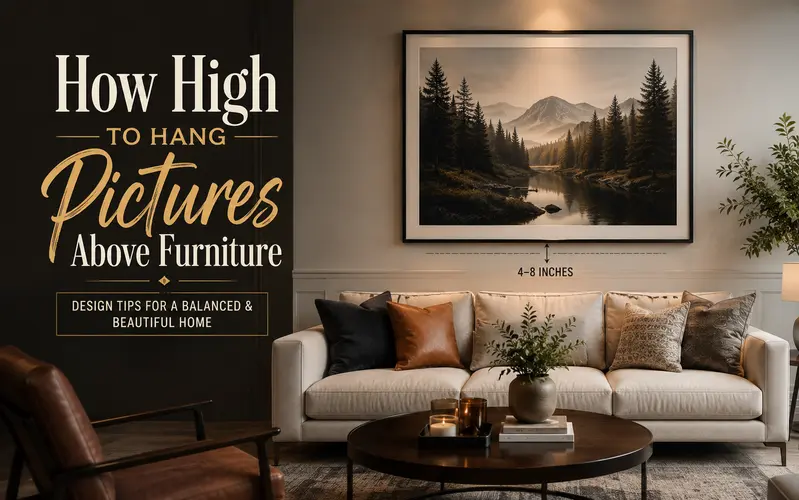
Artwork above furniture follows different rules because the art must visually connect to the furniture.
Ideal Distance Above Furniture
The bottom of the frame should sit:
4 to 8 inches above the furniture
This applies to:
- Sofas
- Beds
- Console tables
- Dressers
- Sideboards
- Fireplaces
If artwork hangs too high above furniture, it feels disconnected from the room.
How High to Hang Pictures Above a Sofa
The sofa is usually the focal point of a living room, so artwork placement matters a lot.
Best Height Above a Couch
- Bottom of frame: 6–8 inches above sofa
- Artwork width: Around two-thirds of sofa width
Example
If your sofa is 90 inches wide, your artwork should ideally be:
- 60 inches wide
Oversized artwork almost always looks better than tiny frames above a couch.
How High to Hang Pictures Above a Bed
Bedrooms need softer, more balanced wall decor.
Best Placement Above Bed
- Keep artwork 4–8 inches above the headboard
- Avoid placing art too close to the ceiling
Ideal Artwork Size
Artwork should cover:
- Half to two-thirds of the bed width
For king beds, larger horizontal artwork works best.
How High to Hang Pictures Above a Fireplace
Fireplaces naturally attract attention, so picture placement should feel balanced.
Recommended Height
- Bottom of artwork: 4–6 inches above mantel
- Leave enough room for decor items
Large vertical gaps above the mantel can make the room feel cold.
How High to Hang Pictures in a Dining Room
Dining rooms are unique because people are seated while viewing the artwork.
Designer Recommendation
Hang pictures slightly lower than normal.
Ideal Center Height
- Around 55–57 inches from the floor
This creates a more intimate and comfortable atmosphere.
How High to Hang Pictures in Hallways
Hallways are typically viewed while walking.
Best Height
Stick closely to:
57–60 inches to the center
If your hallway is narrow, avoid oversized frames that overwhelm the space.
How High to Hang Pictures on Staircase Walls
Staircase walls can feel difficult because the floor level changes.
Best Method
Follow the angle of the staircase.
The center of artwork should remain:
- Around 57–60 inches from the stair tread
This keeps the arrangement visually aligned.
How High to Hang a Gallery Wall
A gallery wall should look organized and connected instead of random frames placed all over the wall. The biggest mistake people make is treating every frame separately. Interior designers recommend treating the entire gallery wall as one large piece of artwork. This helps create balance and gives the room a cleaner, more professional look.
The best way to hang a gallery wall is to keep the center of the entire arrangement around 57 to 60 inches from the floor. This is considered average eye level and makes the artwork comfortable to view. Before hanging anything, lay your frames on the floor first or use paper templates on the wall to test the arrangement.
Best Spacing for Gallery Walls
Proper spacing is extremely important because it keeps the gallery wall looking neat and visually connected. If the frames are too far apart, the arrangement can look messy and disconnected.
For the best results:
- Leave 2–3 inches between each frame
- Keep spacing consistent throughout the arrangement
- Use matching frame colors for a cleaner style
- Mix frame sizes carefully for balance
A well-spaced gallery wall instantly makes your room feel more stylish and organized.
Popular Gallery Wall Layouts
There are different gallery wall styles depending on the look you want for your room. Some layouts feel formal and symmetrical, while others look more modern and creative.
A symmetrical gallery wall works best in traditional homes, offices, and dining rooms because the frames line up evenly and create a clean appearance. This layout feels polished and balanced, especially when using matching frames.
An organic gallery wall is more relaxed and creative. It works beautifully in modern living rooms, hallways, and bedrooms. In this style, frames can vary in size and shape while still feeling visually balanced.
Best Places for a Symmetrical Gallery Wall
- Formal dining rooms
- Offices
- Traditional interiors
- Entryways
Best Places for an Organic Gallery Wall
- Living rooms
- Bedrooms
- Modern homes
- Creative spaces
Both styles can look beautiful if the spacing and height are done correctly.
How to Choose the Right Artwork Size
Choosing the correct artwork size is just as important as hanging it at the proper height. Even expensive artwork can look awkward if it’s too small for the wall. One of the most common decorating mistakes is hanging tiny frames on a large empty wall.
A good rule is that artwork should cover about one-half to two-thirds of the width of the furniture below it. This creates better balance and makes the room feel complete.
Ideal Artwork Width Guide
- Above a sofa: Artwork should cover around 2/3 of the sofa width
- Above a bed: Artwork should cover at least half the headboard width
- Above a console table: Keep artwork slightly narrower than the table
Larger artwork usually looks more luxurious and makes a stronger visual impact in the room.
Why Oversized Art Looks Better
Many homeowners feel nervous about buying large artwork, but oversized art often looks much better than small pieces. Large artwork fills empty wall space properly and creates a stronger focal point in the room.
Small artwork can easily get lost on big walls, especially in rooms with high ceilings. Oversized pieces help make the room feel balanced and professionally decorated.
Benefits of Large Artwork
- Creates a bold focal point
- Makes walls feel complete
- Adds a luxury designer look
- Fills empty wall space properly
- Makes rooms feel more balanced
If you’re unsure about size, it’s usually better to go slightly larger instead of too small.
Common Mistakes When Hanging Pictures
Even beautiful artwork can look wrong if it’s hung incorrectly. Small mistakes in placement can affect the overall appearance of the room.
One of the biggest mistakes is hanging pictures too high. Artwork should feel connected to the furniture and people in the room, not close to the ceiling. Another common problem is choosing artwork that’s too small for the wall.
Most Common Picture Hanging Mistakes
- Hanging artwork too high
- Using frames that are too small
- Leaving large gaps between frames
- Ignoring furniture placement
- Not measuring before hanging
- Hanging gallery walls unevenly
Avoiding these mistakes will instantly improve the look of your home.
The Paper Template Trick Designers Use
Professional decorators rarely hang artwork without testing placement first. One of the easiest tricks is using paper templates before making holes in the wall.
This method allows you to move frames around until everything feels balanced. It also helps avoid unnecessary wall damage from incorrect nail placement.
How to Use Paper Templates
- Trace your frames onto paper
- Cut out the paper shapes
- Tape them to the wall
- Rearrange until satisfied
- Mark nail positions carefully
This simple technique is especially helpful for gallery walls and large artwork arrangements.
How Ceiling Height Affects Picture Placement
Many people assume that high ceilings mean artwork should be hung much higher. However, that’s not always true. Even in rooms with tall ceilings, artwork should still feel connected to the furniture and viewing area.
For standard 8-foot ceilings, the classic 57–60 inch rule works perfectly. In rooms with taller ceilings, you can raise artwork slightly, but not too much.
Ceiling Height Guidelines
Foot Ceilings
- Keep artwork centered at 57–60 inches
10 Foot Ceilings
- You can increase height slightly to 60–63 inches
Avoid hanging artwork too close to the ceiling because it can make the room feel cold and disconnected.
Should All Pictures Be Hung at the Same Height?
Not necessarily. Every room has different furniture sizes, ceiling heights, and layouts. What matters most is creating visual balance throughout the space.
However, within a gallery wall or grouped arrangement, keeping consistent spacing and alignment helps the wall look cleaner and more organized.
When Consistency Matters Most
- Gallery walls
- Multiple frames above furniture
- Hallway picture arrangements
- Symmetrical wall layouts
Balanced placement always looks more professional than perfectly identical measurements everywhere.
Designer Tips Most Articles Don’t Mention
Interior designers use several simple tricks that most homeowners overlook. These small details can make your walls look much more polished and professionally styled.
One helpful trick is outlining artwork dimensions with painter’s tape before hanging. This helps you visualize size and spacing before making holes in the wall.
Expert Designer Tips
- Use painter’s tape to test artwork size
- Take a photo before hanging frames
- Match artwork size to wall size
- Use larger art in spacious rooms
- Hang artwork slightly lower in cozy spaces
These simple adjustments can completely improve the final result.
Quick Cheat Sheet for Picture Hanging

If you want a simple guide to remember, these measurements work in most homes and rooms.
Picture Hanging Cheat Sheet
Empty Walls
- Center artwork at 57–60 inches from the floor
Above Furniture
- Leave 4–8 inches between furniture and artwork
Gallery Walls
- Treat the entire grouping as one piece
- Keep center at 57–60 inches
Frame Spacing
- Leave 2–3 inches between frames
Artwork Width
- Artwork should cover 1/2 to 2/3 of furniture width
These simple rules help create balanced and beautiful walls
FAQs
What is the best height to hang pictures?
The center of the picture should usually be 57–60 inches from the floor.
How high should art hang above a sofa?
Keep the bottom of the frame 6–8 inches above the sofa.
How much space should be between gallery wall frames?
Leave around 2–3 inches between each frame.
What is the 57-inch rule?
It means the center of the artwork should sit 57 inches from the floor at eye level.
Should pictures be hung at eye level?
Yes, eye-level placement usually looks the most balanced and natural.
How high should pictures hang above a bed?
Hang artwork about 4–8 inches above the headboard.
Is oversized artwork better?
Yes, larger artwork usually creates a stronger and more stylish focal point.
Final Thoughts
Learning how high to hang pictures can completely transform the appearance of your home. Correctly placed artwork makes rooms feel more elegant, comfortable, and professionally designed.
The most important thing is creating balance between your artwork, furniture, and wall space. Following simple guidelines like the 57–60 inch rule, proper spacing, and choosing the correct artwork size can instantly improve your interior design.