
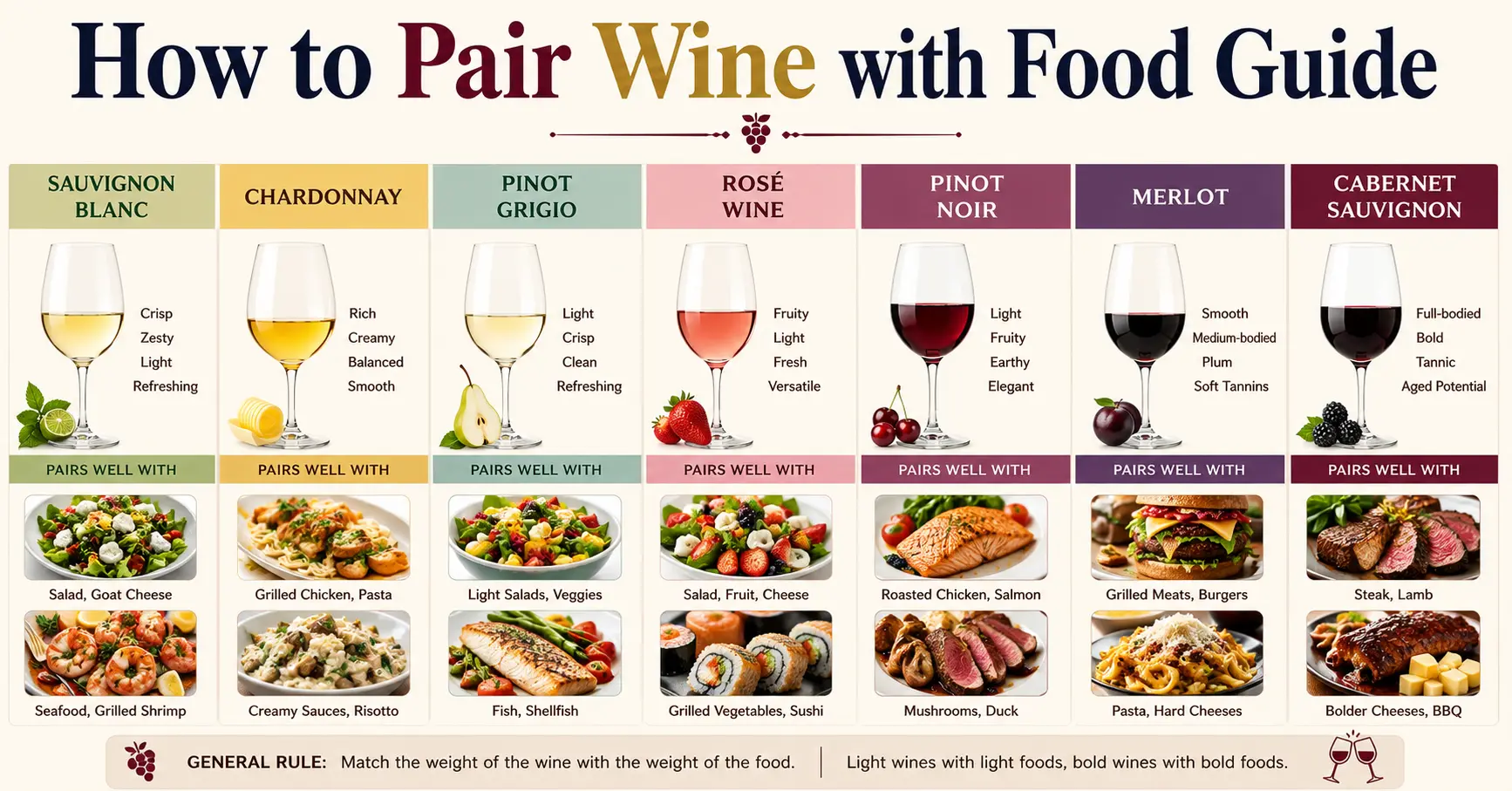
How to Pair Wine with Food Guide pairing wine with food does not have to feel like a pop quiz. Once you understand a handful of core principles, you will start making confident choices every time, whether you are hosting a dinner party or just cracking open a bottle on a Tuesday night.
This guide goes beyond the basic ‘red with meat, white with fish’ rule. You will learn why certain combinations work, which flavor profiles to look for, how to handle tricky foods, and what mistakes to avoid. By the end, you will have a clear framework you can apply to any dish.
Why Wine Pairing Matters (And Why It’s Easier Than You Think)
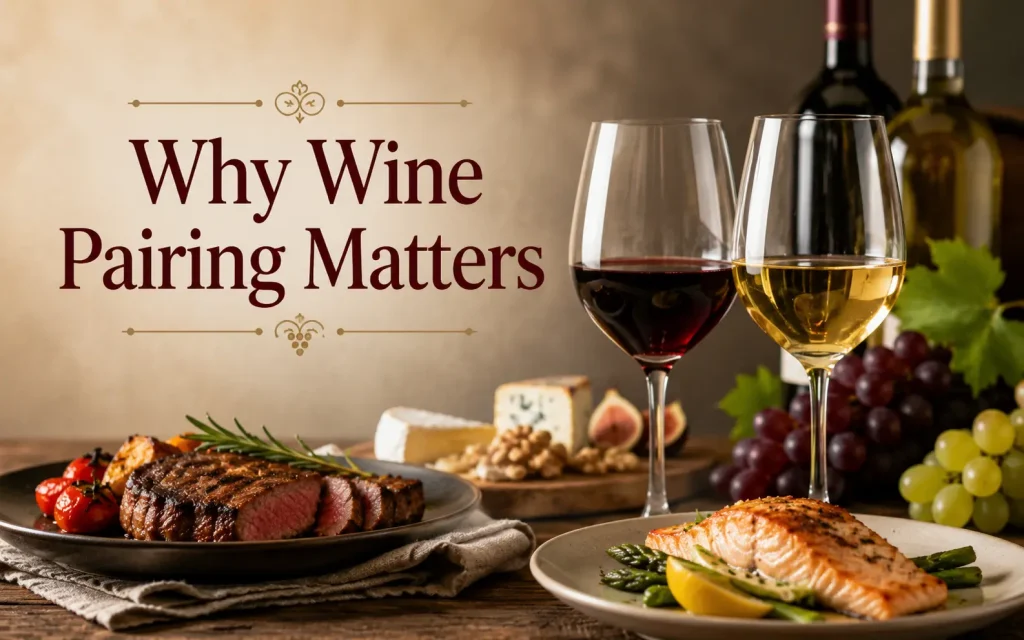
A great pairing does two things: it makes the food taste better and it makes the wine taste better. A poorly matched pair can do the opposite; a tannic red wine alongside a delicate fish can make the wine taste harsh and the fish taste metallic.
The good news? There are really only a few key concepts to grasp. After that, it is mostly practice and personal preference.
The Golden Rules of Wine and Food Pairing
1. Match the Weight of the Wine to the Weight of the Dish
This is the single most important rule. Light-bodied wines belong with lighter dishes. Full-bodied wines belong with richer, heartier dishes. Think of it like a conversation: you want both sides to have a similar energy.
- Light dishes (salads, steamed fish, soft cheeses): Pinot Grigio, Sauvignon Blanc, Pinot Noir
- Medium dishes (pasta with cream sauce, roast chicken): Chardonnay, Merlot, Grenache
- Heavy dishes (beef stew, lamb, aged cheeses): Cabernet Sauvignon, Syrah, Malbec, Zinfandel
2. It’s About the Sauce, Not Just the Protein
Here is something competitors often gloss over: the cooking method and sauce matter far more than the main ingredient. Chicken is a perfect example.
- Chicken in a lemon herb sauce: crisp white like Sauvignon Blanc
- Chicken in a creamy mushroom sauce: oaked Chardonnay or Viognier
- Coq au vin (chicken braised in red wine): medium-bodied red like Burgundy or Pinot Noir
- Thai green chicken curry: aromatic white like Riesling or Pinot Gris
The same logic applies to salmon, pasta, and even vegetables. Ask yourself: what is the dominant flavor in this dish?
3. Match Acidity to Acidity
High-acid wines pair beautifully with high-acid foods. A tangy tomato-based pasta sauce can strip the fruit from a low-acid wine and make it taste flat. But pair the same dish with a bright Chianti or Barbera, and both the food and wine come alive.
Foods with lemon, vinegar, or tomato: reach for wines with high acidity, including Sauvignon Blanc, Pinot Grigio, Sangiovese, or Spanish Tempranillo.
4. Tannins and Fat Are Best Friends
Tannins are the compounds in red wine that create that dry, grippy sensation in your mouth. They need fat and protein to balance them out, which is exactly why a big Cabernet Sauvignon works so well with a ribeye steak.
Avoid pairing high-tannin wines with delicate fish or vegetable-heavy dishes. The tannins will overpower the food and taste harsh on their own.
5. Sweet Wines Must Be Sweeter Than the Dessert
This is a rule that many beginners get wrong. If your dessert wine is less sweet than the dish itself, the wine will taste sour and flat. A light Sauternes paired with a dark chocolate cake is a classic mismatch.
For dessert pairings, stick to simple options like fruit tarts, panna cotta, or mild cakes. Or, choose a wine that is noticeably sweeter than what you are eating.
6. Regional Pairings Almost Always Work
There is truth to the phrase: ‘If it grows together, it goes together.’ Wines and foods from the same region have evolved alongside each other for centuries.
- Italian Chianti with pasta and tomato sauce
- French Muscadet with oysters
- Spanish Rioja with lamb chops
- Portuguese Vinho Verde with grilled sardines
- German Riesling with sauerkraut and pork
When in doubt, go regional. You are rarely wrong.
What Your Competitors Don’t Tell You: Advanced Pairing Tips

Certain Foods Are Wine’s Worst Enemy
Some foods actively clash with almost every wine. Knowing this saves you from a frustrating experience.
- Artichokes and asparagus: contain compounds that make wine taste metallic or sweet in an unpleasant way. If you must serve them, choose a very crisp, neutral white like Pinot Grigio.
- Heavily vinegar-dressed salads: the acidity overpowers wine. Serve wine before or after the salad, or choose a very high-acid wine like a dry Riesling.
- Very spicy dishes: high alcohol in wine amplifies heat. Choose off-dry wines with lower alcohol, like a slightly sweet Riesling or Gewurztraminer. Avoid high-tannin reds.
- Dark chocolate: coats the palate and makes tasting wine nearly impossible. Pair with a sweet fortified wine like Port or Banyuls instead.
- Eggs: surprisingly tricky. They coat the palate in a way that dulls wine flavors. A sparkling wine like Cava or Prosecco, with its bubbles and acidity, cuts through best.
Sparkling Wine Is the Most Versatile Option on the Table
Most guides treat sparkling wine as a starter or celebration drink. In reality, a good dry sparkling wine is one of the most food-friendly bottles you can open. Its bubbles act as a palate cleanser, and its acidity works with a wide range of flavors.
Champagne, Cava, and Crémant pair well with: fried food (the bubbles cut through oil beautifully), oysters, sushi, soft cheeses, charcuterie, and even potato chips. Keep a bottle of Cava in the fridge. It is your safety net for tricky food situations.
Rosé Is More Than a Summer Wine
Dry rosé, particularly from Provence, is one of the most underused food pairing wines. Its combination of red fruit flavors and white wine acidity gives it remarkable range.
Rosé pairs well with: grilled salmon, tuna tartare, Mediterranean dishes, roasted chicken, mild spicy food, and charcuterie boards. Think of dry rosé as a bridge between red and white.
How to Handle a Multi-Course Meal
Serving multiple wines across a meal follows a simple progression:
- Light before full-bodied: start with whites or sparkling, then move to reds
- Dry before sweet: always serve dessert wines last
- Young before old: if serving aged wines, save them for a course where they can shine
- White wines before red wines, unless the menu reverses this logic
If you only want to serve one wine for the whole meal, choose a versatile medium-bodied option. Pinot Noir, dry rosé, and Grüner Veltliner are reliable all-rounders.
Temperature Changes Everything
Serving wine at the wrong temperature is one of the most common mistakes. It can mask the best qualities of a wine and amplify the worst.
- Sparkling wines: 6 to 8 degrees C (42 to 46 F)
- Light white and rosé wines: 8 to 10 degrees C (46 to 50 F)
- Full-bodied white wines: 10 to 13 degrees C (50 to 55 F)
- Light red wines (Pinot Noir, Beaujolais): 12 to 14 degrees C (54 to 58 F)
- Medium to full-bodied reds: 16 to 18 degrees C (61 to 64 F)
- Sweet and dessert wines: 6 to 8 degrees C (42 to 46 F)
Room temperature in most homes is warmer than ideal for red wine. Put your red in the fridge for 15 minutes before serving. It makes a real difference.
Quick-Reference Wine Pairing Chart
| Wine | Best Pairings | Avoid |
|---|---|---|
| Sauvignon Blanc | Seafood, goat cheese | Red meat |
| Chardonnay | Chicken, creamy pasta | Spicy dishes |
| Pinot Grigio | Fish, salads | Smoky foods |
| Riesling | Spicy food, duck | Red meat |
| Champagne | Oysters, sushi | Rich stews |
| Dry Rosé | Salmon, chicken | Sweet desserts |
| Wine | Best Pairings | Avoid |
|---|---|---|
| Pinot Noir | Salmon, mushrooms | Aged cheese |
| Merlot | Pork, pasta | Acidic foods |
| Cabernet Sauvignon | Steak, lamb | Fish |
| Malbec | Beef, BBQ | Seafood |
| Syrah/Shiraz | Grilled meat | White fish |
| Port | Chocolate, blue cheese | Savory mains |
Common Wine Pairing Mistakes to Avoid
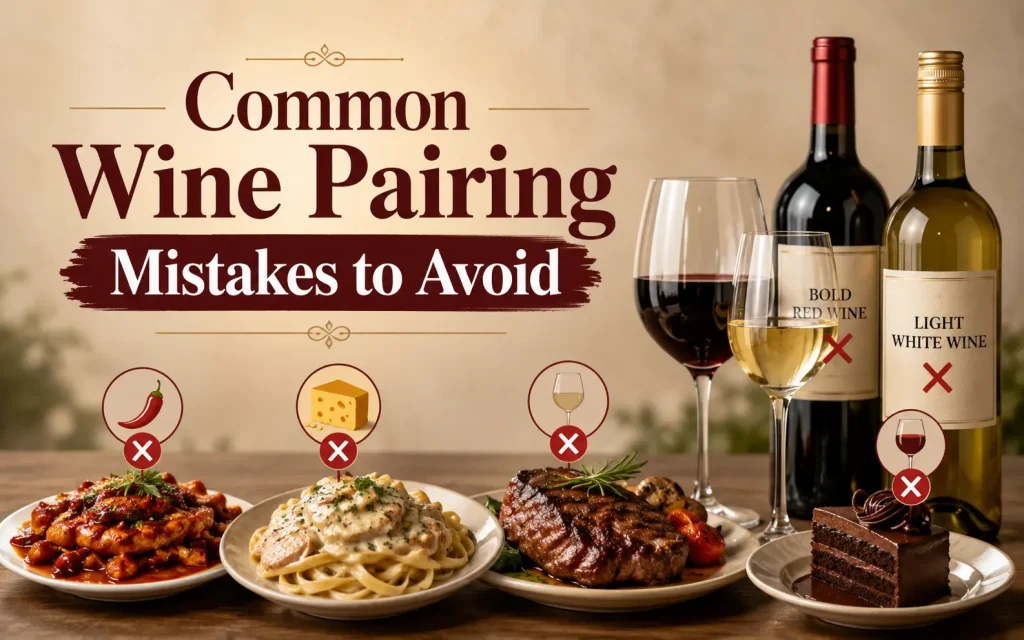
- Assuming red always goes with meat and white always goes with fish. This oversimplification causes more bad pairings than anything else.
- Ignoring alcohol content. High-alcohol wines amplify spice and can overwhelm delicate dishes. Check the label and choose accordingly.
- Forgetting about the side dishes. Roasted garlic, pickled vegetables, or a strongly flavored dressing can shift the entire flavor profile of a meal.
- Serving wine too warm. A red served above 20 degrees C tastes flat and alcoholic. Slightly chilled is almost always better.
- Letting the dessert be sweeter than the wine. The wine will taste sour and unpleasant. Always choose a wine that is at least as sweet as the dessert.
- Overcooking or over-seasoning food. Even a perfect pairing falls apart if the food itself is overcooked, too salty, or dominated by a single overpowering ingredient.
A Simple Framework for Any Situation
When you sit down with a new dish and do not know where to start, run through these five questions:
- How heavy is this dish Light, medium, or rich and hearty
- What is the dominant flavor The sauce, the seasoning, or the cooking method
- Is the dish acidic, fatty, sweet, or spicy This tells you which wine characteristics to look for or avoid.
- Is there a regional pairing If the dish is Italian, French, or Spanish, start with a wine from that country.
- What do you actually like The best pairing is the one you enjoy. Rules are a starting point, not a sentence.
FAQs
What is the basic rule for pairing wine with food?
The basic rule is to match the intensity of the wine with the intensity of the food. Light dishes pair well with light wines, while rich and hearty meals work best with full-bodied wines.
Which wine pairs best with seafood?
White wines such as Sauvignon Blanc, Pinot Grigio, and Champagne usually pair well with seafood because of their crisp acidity and light flavors.
Can red wine be served with fish?
Yes, light red wines like Pinot Noir can pair well with fatty fish such as salmon or tuna. However, heavy red wines are generally not recommended with delicate fish.
How do I pair wine with dessert?
Dessert wine should usually be as sweet as or sweeter than the dessert itself. Port wine pairs especially well with chocolate, nuts, and blue cheese.
Is it okay to break traditional wine pairing rules?
Absolutely. Personal taste matters most. Wine pairing guidelines are helpful, but experimenting with different combinations can help you discover your own favorite matches.
Final Thoughts
Wine pairing is a skill you build over time, one meal at a time. Start with the golden rules, use the quick-reference chart above, and pay attention to what you enjoy. You will get a feel for it faster than you expect.
The most important thing is to be curious. Try a pairing, notice what works and what does not, and adjust next time. There is no failure in wine pairing. Only tastier experiments.
Article written to outperform competitor content on wine and food pairing. All guidelines: E-E-A-T signals, active voice, skimmable structure, semantic keyword optimization.
You May Also Like It:
How to Use ChatGPT for Style Guides
