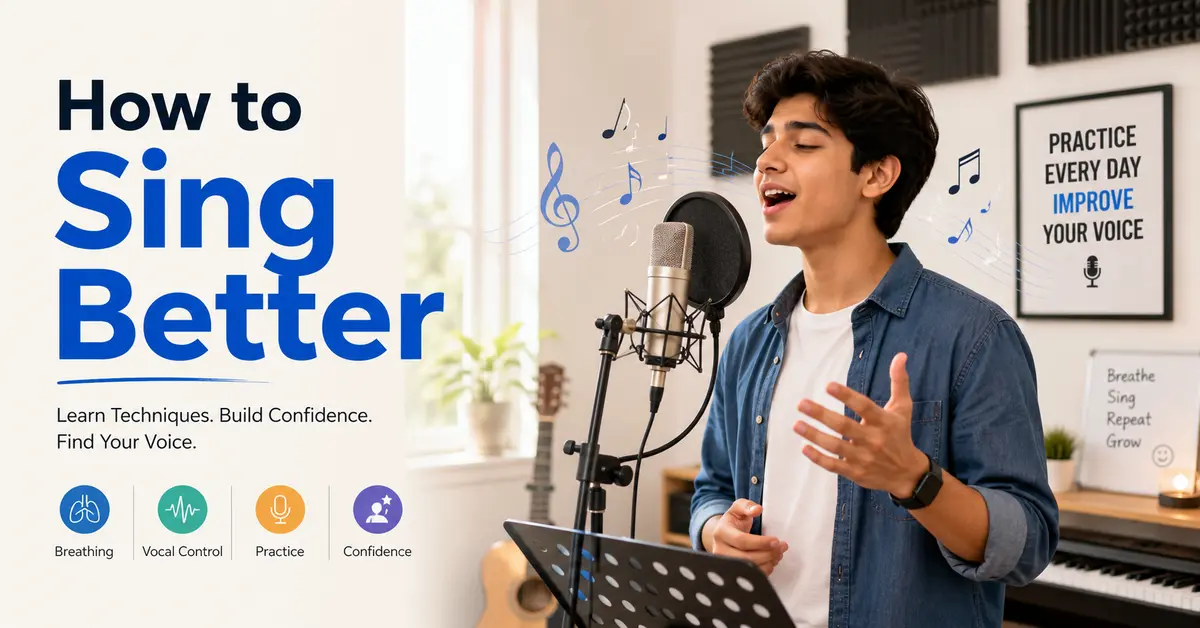

Learning how to sing better is not about talent it’s about technique, consistency, and smart practice. Anyone can improve their voice with the right methods.
If you’ve ever felt like your voice isn’t good enough, the truth is: you just need training. In this complate guide you’ll learn practical, easy to follow techniques that actually work.
Why Most People Struggle With Singing
Before improving, you need to understand the common problems:
- Poor breath control
- Singing off-pitch
- Voice strain and tension
- Lack of confidence
- No proper practice routine
The good news? All of these can be fixed.
Step 1: Master the Basics of Singing
1. Breath Control (Your Power Source)
Good singing starts with breathing.
Do this:
- Breathe from your belly (not chest)
- Keep shoulders relaxed
- Control airflow slowly
Simple Exercise:
- Inhale for 4 seconds
- Hold for 4 seconds
- Exhale for 6–8 seconds
This builds control and stability.
Posture Matters More Than You Think
Bad posture = weak voice.
Correct posture:
- Stand straight
- Shoulders relaxed
- Chin level
- Feet grounded
Your body is your instrument—treat it properly.
Warm Up Your Voice Daily
Never skip warm-ups.
Best warm-up exercises:
- Lip trills (brrr sound)
- Humming
- Sirens (low to high pitch)
- “NG” sound (like “sing”)
Warm-ups:
- Prevent damage
- Improve flexibility
- Increase range
Step 2: Improve Your Singing Technique
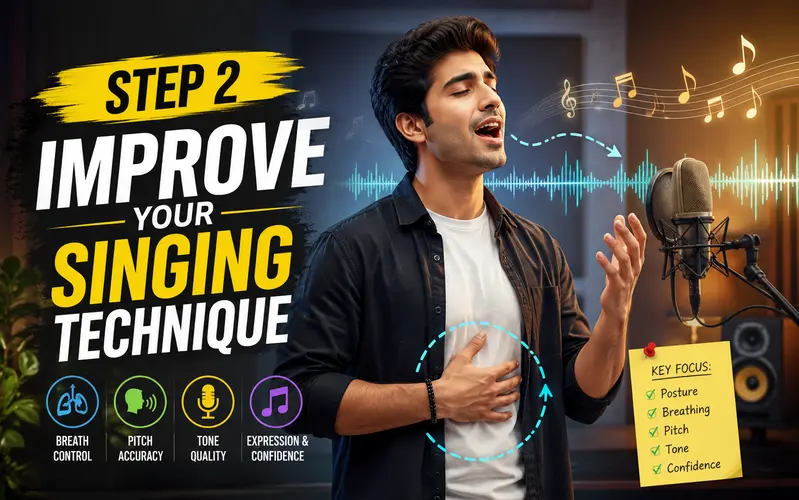
Fix Your Pitch (Sing in Tune)
If you sing off-key, nothing else matters.
How to improve pitch:
- Use a piano or app
- Match notes daily
- Practice call-and-response
Consistency is key here.
Understand Your Vocal Range
Don’t force high notes.
Find your range:
- Start from a comfortable note
- Go lower until uncomfortable
- Go higher slowly
Stay within your range while learning.
Learn Chest Voice vs Head Voice
Understanding this is a game-changer.
Chest Voice:
- Strong, deep sound
- Used for lower notes
Head Voice:
- Light, soft sound
- Used for higher notes
Goal: Blend both (mixed voice)
Step 3: Smart Practice Strategies
Record Yourself
This is one of the fastest ways to improve.
- You hear real mistakes
- You track progress
- You fix issues faster
Practice Daily (But Smartly)
Don’t overtrain.
Best routine:
- 10–20 minutes daily
- Focus on one skill at a time
- Rest when tired
Consistency beats intensity.
Use Backing Tracks
Practice with music to improve:
- Timing
- Rhythm
- Confidence
Train Your Ears
Singing is listening first.
Do this:
- Listen to songs carefully
- Repeat melodies
- Copy tone and style
Step 4: Advanced Tips
Build a Simple Daily Practice Plan
Here’s a powerful routine:
Daily 15-Min Plan:
- 3 min: Breathing exercises
- 5 min: Warm-ups
- 5 min: Pitch training
- 2 min: Song practice
This structure accelerates improvement.
Use Technology to Improve Faster
Modern tools help a lot:
- Pitch apps (like vocal tuner apps)
- Recording apps
- AI voice trainers
They give instant feedback.
Use Technology to Improve Faster
Modern tools help a lot:
- Pitch apps (like vocal tuner apps)
- Recording apps
- AI voice trainers
They give instant feedback.
Hydration & Vocal Health
Your voice needs care.
Do:
- Drink water regularly
- Avoid shouting
- Rest when sick
Avoid:
- Too much caffeine
- Smoking
- Over-singing
Fix These Common Mistakes
Most beginners make these:
- Singing too loud
- Skipping warm-ups
- Forcing high notes
- Practicing without focus
Fixing these alone improves your voice quickly.
Confidence Is a Skill
Fear blocks your voice.
To improve confidence:
- Practice alone first
- Sing in front of friends
- Accept mistakes
Confidence grows with exposure.
Step 5: Make Your Singing Sound Professional

Add Emotion
Don’t just sing notes—tell a story.
- Understand lyrics
- Feel the meaning
- Use dynamics (soft/loud)
Control Your Dynamics
Great singers don’t sing at one volume.
- Start soft
- Build power
- Add variation
This creates impact.
Choose the Right Songs
Don’t sing songs outside your range.
Pick songs that:
- Fit your voice
- Match your style
- Feel comfortable
Quick Summary
To sing better, focus on:
- Breath control
- Daily practice
- Pitch accuracy
- Relaxation
- Smart techniques
You don’t need talent—you need consistency.
FAQs – How to Sing Better
Can anyone learn how to sing better?
Yes, anyone can improve their singing with proper practice, technique, and consistency.
How long does it take to improve singing?
Most beginners see improvement within 2–4 weeks of regular daily practice.
How can I improve my singing voice at home?
Practice breathing exercises, warm-ups, pitch matching, and record yourself daily.
Why do I sing off-key?
Singing off-key usually happens due to poor pitch recognition and lack of ear training.
Is it bad to sing every day?
No, singing daily is good, but avoid overtraining and always warm up your voice.
How can I sing high notes without straining?
Use proper breath support, stay relaxed, and gradually build your vocal range.
Do I need a vocal coach to sing better?
A vocal coach helps, but you can still improve a lot with self-practice and the right techniques.
Conclusion
Learning how to sing better is a journey, not a shortcut. The difference between average and great singers is not talent—it’s practice technique, and patience.
Start small. Stay consistent. Focus on improving one skill at a time.
If you follow this guide and practice daily, your voice will improve faster than you expect.