
How to Start a Blog Starting a blog is one of the best ways to build an online presence, share your ideas, and even earn money online. Many beginners think blogging is difficult, but the truth is: if you follow the right steps in the right order, you can launch a professional blog very quickly.
In this guide you will learn everything from choosing a niche to publishing your first blog post. This is a complete beginner-friendly roadmap written in simple language.
What is a Blog?
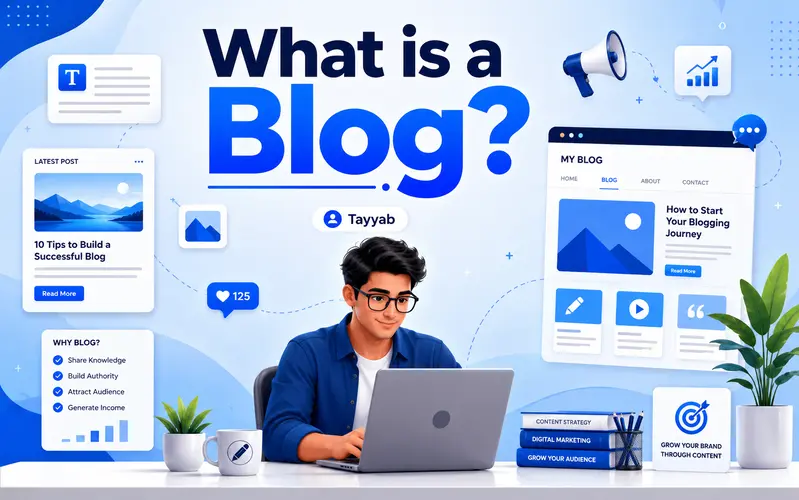
A blog is a website where you regularly publish articles (called blog posts) on a specific topic. These posts can be about education, travel, technology, food, fitness, business, or anything you are interested in.
Blogs are used for:
- Sharing knowledge
- Building a personal brand
- Earning money online
- Promoting products or services
step-by-Step Guide to Start a Blog
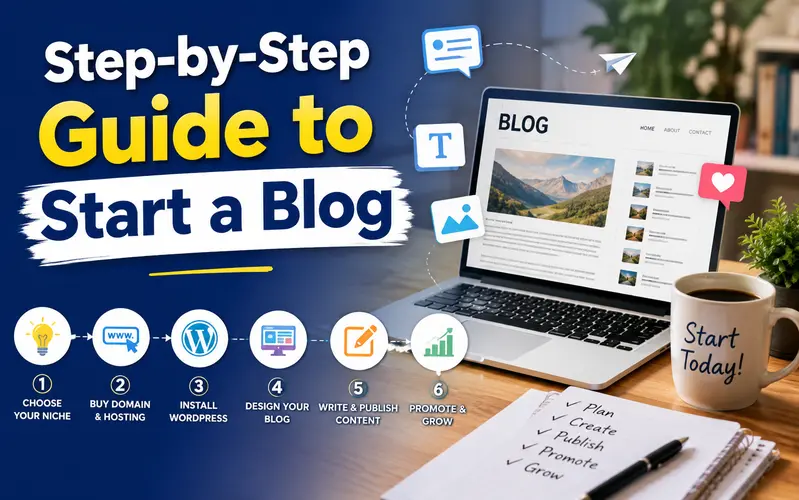
Now let’s go through the complete process of starting a blog from scratch.
Step 1: Choose Your Blog Niche
Your niche is the main topic of your blog. It is very important because it decides your audience and future income.
How to choose a good niche:
- Pick something you are interested in
- Make sure people search about it online
- Check if it has earning potential
Popular blog niches:
- Technology
- Health & Fitness
- Food & Recipes
- Travel
- Online Earning
- Education
Tip: Don’t choose too many topics. Focus on one clear niche.
Step 2: Pick a Blog Name
Your blog name is your brand identity. It should be:
- Easy to remember
- Short and simple
- Related to your niche
Example:
If your niche is food, your blog name could be something like “Tasty Bites Guide” or “Easy Cooking Hub”.
H3: Step 3: Buy a Domain Name
A domain name is your website address
Tips for choosing a domain:
- Keep it short
- Avoid numbers and symbols
- Use .com if possible
You can buy domains from providers like Namecheap, GoDaddy, or Google Domains.
Step 4: Choose Web Hosting
Web hosting is where your website files are stored.
Without hosting, your blog cannot be live on the internet.
Popular hosting providers:
- Bluehost
- Hostinger
- SiteGround
For beginners, shared hosting is enough and budget-friendly.
Step 5: Install WordPress
WordPress is the most popular blogging platform in the world.
Why WordPress?
- Easy to use
- No coding required
- Thousands of themes and plugins
- SEO friendly
Most hosting companies offer 1-click WordPress installation, which makes it very easy.
Step 6: Choose a Blog Theme
A theme controls the design and layout of your blog.
- Good theme qualities:
- Fast loading
- Mobile friendly
- Clean design
- SEO optimized
Free themes like Astra or GeneratePress are great for beginners.
Step 7: Install Important Plugins
Plugins add extra features to your blog.
Must-have plugins:
- Yoast SEO (for SEO optimization)
- Elementor (for page design)
- WP Rocket (for speed)
- Akismet (for spam protection)
Be careful not to install too many plugins because it can slow down your website.
Step 8: Create Important Pages
Before writing blog posts, you should create basic pages.
Important pages:
- About Us
- Contact Us
- Privacy Policy
- Disclaimer
These pages help build trust and make your blog look professional.
tep 9: Write Your First Blog Post
Now comes the most important part: writing content.
- How to write a good blog post:
- Start with an engaging introduction
- Use headings and subheadings
- Write in simple language
- Add useful information
- Keep paragraphs short
Example blog post structure:
- Introduction
- Problem explanation
- Step-by-step solution
- Conclusion
Try to write at least 1000–1500 words for a strong SEO post.
Step 10: Do Basic SEO Optimization
SEO (Search Engine Optimization) helps your blog rank on Google.
Basic SEO tips:
- Use your main keyword in title
- Add keywords in headings
- Write meta description
- Use internal links
- Optimize images
Good SEO = more traffic = more income.
Step 11: Publish Your Blog
After writing and optimizing your post, click the publish button.
But publishing alone is not enough. You must also promote your blog.
Step 12: Promote Your Blog
If you don’t promote your blog, no one will read it.
- Ways to promote:
- Share on social media
- Use Pinterest
- Post in Facebook groups
- Answer questions on Quora
- Do guest posting
Consistency is the key to growth.
Common Mistakes Beginners Make

Avoid these mistakes:
- Choosing too many topics
- Not posting regularly
- Ignoring SEO
- Copy-pasting content
- Giving up too early
Blogging takes time, but results are long-term.
How Long Does It Take to Succeed in Blogging?

Blogging is not instant success. It usually takes:
- 3 to 6 months for initial traffic
- 6 to 12 months for steady income
- 1+ year for strong growth
Consistency is more important than speed.
Advanced SEO Tips for Better Ranking
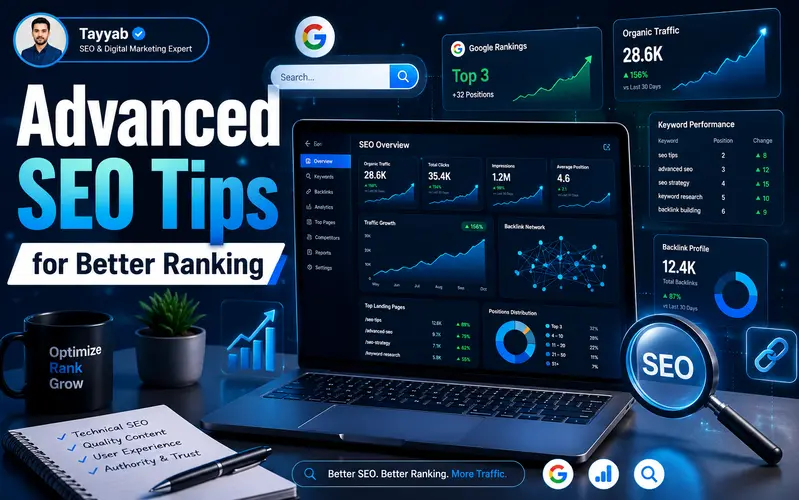
After publishing your blog, you can improve your rankings with advanced SEO techniques.
- Build high-quality backlinks from other websites
- Improve page loading speed
- Use long-tail keywords in your articles
- Update old posts regularly
- Focus on user experience and mobile optimization
These steps help your blog rank higher on Google and bring long-term traffic.
FAQs (Frequently Asked Questions)
How much money do I need to start a blog?
You can start a blog with a small budget. Usually domain and hosting cost around a basic monthly or yearly fee, depending on the provider.
Can I start a blog for free?
Yes, you can start a free blog on platforms like Blogger or WordPress.com, but a self-hosted blog is better for growth and earning.
How long does it take to make money from blogging?
It usually takes 3 to 12 months depending on your content quality, SEO, and consistency.
What is the best niche for blogging?
Popular niches include technology, health, fitness, food, travel, and online earning. The best niche is the one you understand well.
Do I need coding skills to start a blog?
No, you don’t need any coding skills. WordPress allows you to create and manage a blog easily.
How many posts should I publish to get traffic?
There is no fixed number, but publishing 20–50 quality posts can start bringing organic traffic.
Is blogging still profitable in 2026?
Yes, blogging is still profitable if you focus on SEO, quality content, and consistent posting.
Final Conclusion
Starting a blog is one of the best long-term online opportunities. It allows you to work from anywhere, share your ideas with the world, and build your own online brand step by step.
If you follow all the steps carefully—choosing the right niche, setting up WordPress, writing high-quality SEO-friendly content, promoting your blog, and applying monetization methods—you can successfully build a profitable blog even as a complete beginner.
Blogging success does not happen overnight. It requires time, effort, and smart work. But if you stay consistent and keep improving your content, your blog can grow into a strong source of traffic and income.
The real key to success in blogging is simple: consistency, patience, and continuous learning.