
How to Brew Green Tea Green tea is one of the most popular and healthiest beverages in the world, known for its light flavor, natural antioxidants, and calming effect on the body. Unlike black tea, green tea is less processed, which helps preserve its natural nutrients and fresh taste. However, many people do not brew it correctly, which often leads to a bitter, weak, or unpleasant cup. Brewing green tea the right way is simple, but it requires attention to temperature, timing, and tea quality In this complete guide you will learn everything step-by-step so you can make a perfect cup every time.
Understanding Green Tea
Green tea comes from the leaves of the plant Camellia sinensis, the same plant used for black and oolong tea. The difference lies in how the leaves are processed. Green tea leaves are quickly heated after harvesting to prevent oxidation, which keeps their green color and fresh, grassy taste.
Because it is minimally processed, green tea retains natural compounds called antioxidants, especially catechins. These are believed to support heart health, improve brain function, and help with metabolism. However, the health benefits depend greatly on how you brew it. Overheating or over-steeping can destroy nutrients and make the tea taste bitter.
Choosing the Right Green Tea
Before brewing, selecting good-quality tea is essential. There are several types of green tea available:
- Loose-leaf green tea: Highest quality and best flavor
- Green tea bags: Convenient but often lower quality
- Japanese green teas (Sencha, Matcha): Fresh, grassy, and rich in nutrients
- Chinese green teas (Longjing, Gunpowder): Mild, slightly nutty flavor
If possible, choose loose-leaf tea because it allows the leaves to expand fully, giving a richer taste and better aroma.
Water Quality Matters
Water is often ignored, but it plays a major role in tea flavor. Always use clean, fresh water. Filtered water is ideal because tap water with chlorine or strong minerals can affect the taste.
Avoid using distilled water as it lacks minerals that help bring out the tea’s natural flavor.
The Perfect Water Temperature
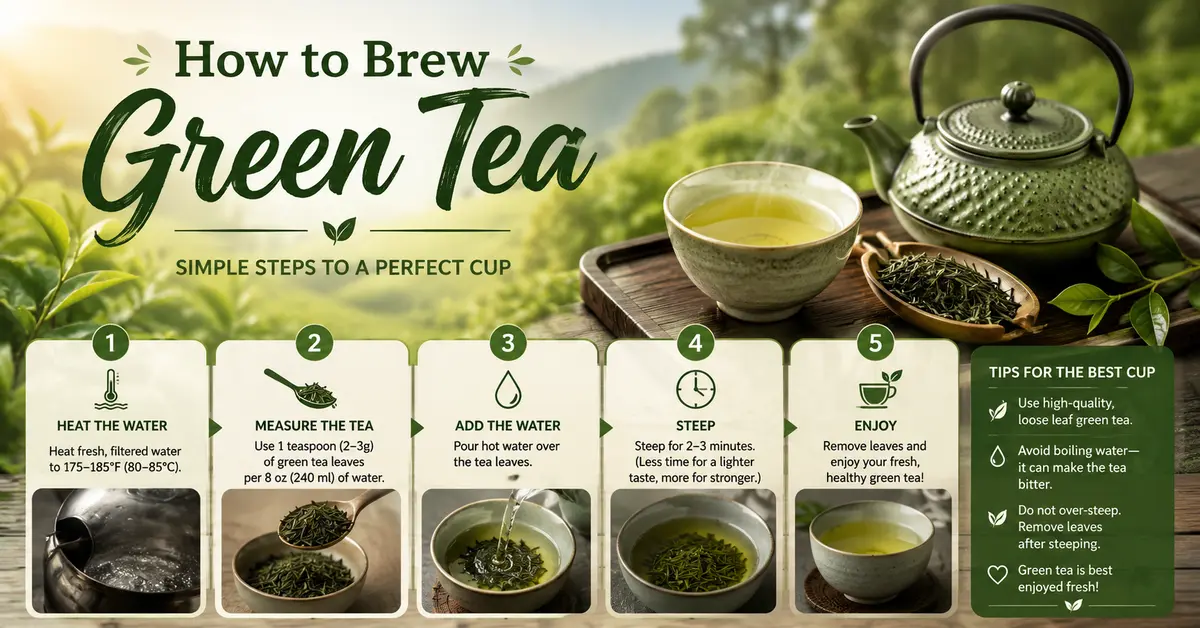
One of the biggest mistakes people make is using boiling water. Green tea is delicate, and boiling water (100°C) can burn the leaves, resulting in a bitter taste.
The ideal temperature for brewing green tea is:
- 70°C to 80°C (158°F to 176°F)
If you do not have a thermometer, simply boil the water and let it rest for 2–3 minutes before pouring it over the tea leaves.
How Much Tea to Use
The right tea-to-water ratio ensures balanced flavor
- 1 teaspoon (2–3 grams) of loose-leaf green tea per 1 cup (250 ml) of water
If you prefer stronger tea, slightly increase the amount of leaves rather than steeping longer.
Step by Step Brewing Process

Step 1: Heat the Water
Heat fresh water until it reaches just below boiling point. Turn off the heat and let it cool slightly.
Step 2: Prepare the Tea Leaves
Place green tea leaves in a teapot, cup, or infuser. Make sure the leaves have enough space to expand.
Step 3: Pour the Water
Slowly pour the hot water over the tea leaves. This helps release flavor evenly.
Step 4: Steep Properly
Let the tea steep for:
- 1 to 3 minutes for mild flavor
- 3 to 4 minutes for stronger flavor
Do not exceed 4 minutes, as over-steeping makes the tea bitter.
Step 5: Strain and Serve
Remove the leaves or strain the tea into a cup. Your green tea is ready to drink.
Common Mistakes to Avoid
Many people struggle with brewing green tea because of a few simple mistakes:
Using boiling water
This is the most common error. It destroys flavor and nutrients.
Over steeping
Leaving tea for too long makes it bitter and harsh.
Using too many leaves
More tea does not always mean better taste.
Reusing old leaves too many times
While green tea can be steeped 2–3 times, the flavor decreases with each brew.
Cold Brew Green Tea
Cold brewing is a modern and refreshing way to enjoy green tea. It produces a smoother, less bitter taste.
How to cold brew:
- Add 1–2 teaspoons of green tea leaves to 1 glass of cold water
- Place it in the refrigerator for 6–8 hours
- Strain and enjoy chilled
This method is perfect for hot weather and is gentler on the stomach.
Health Benefits of Green Tea
Green tea is widely appreciated not just for taste but also for health benefits. Some of the most notable include:
Rich in Antioxidants
Green tea contains polyphenols that help protect cells from damage.
Improves Brain Function
It contains caffeine and L-theanine, which may improve focus and alertness.
Supports Weight Management
Some studies suggest it may help boost metabolism slightly.
May Support Heart Health
Regular consumption is linked to improved cholesterol levels.
Helps Relaxation
Despite having caffeine, green tea has a calming effect due to natural compounds.
Best Time to Drink Green Tea

Timing also matters:
- Morning: Boosts energy and focus
- After meals: Aids digestion
- Afternoon: Helps reduce fatigue
Avoid drinking it on an empty stomach if you are sensitive to caffeine.
Enhancing the Flavor
If you find plain green tea too mild, you can enhance it naturally:
- Add lemon slices for freshness
- Add honey for sweetness
- Add mint leaves for cooling effect
- Mix with jasmine flowers for aroma
Avoid adding too much sugar, as it can reduce health benefits.
Storage Tips
To maintain freshness:
- Store tea in an airtight container
- Keep it away from sunlight, moisture, and strong odors
- Use within 6–12 months for best flavor
FAQs About Brewing Green Tea
Can I reuse green tea leaves?
Yes, 1–2 times is okay, but flavor will be lighter.
Why does my green tea taste bitter?
Usually due to boiling water or oversteeping.
Is green tea better hot or cold?
Both are healthy; hot tea gives stronger aroma, cold tea is refreshing.
How many cups of green tea per day is safe?
2–3 cups per day is generally safe for most people.
Can I drink green tea on an empty stomach?
It depends on your body; some people may feel acidity.
Conclusion
Brewing green tea is an art that becomes easy once you understand the basics. The key lies in controlling water temperature, steeping time, and using good-quality tea leaves. When done correctly, green tea offers a smooth, refreshing taste along with powerful health benefits. Whether you enjoy it for weight loss, relaxation, or daily wellness, mastering this simple brewing process ensures every cup is perfect. Start practicing these steps and you will quickly notice a big difference in flavor and quality.